
第 1 课
学习新汉字 (6/14)
|
HSK (1)
|
||
|
一
|
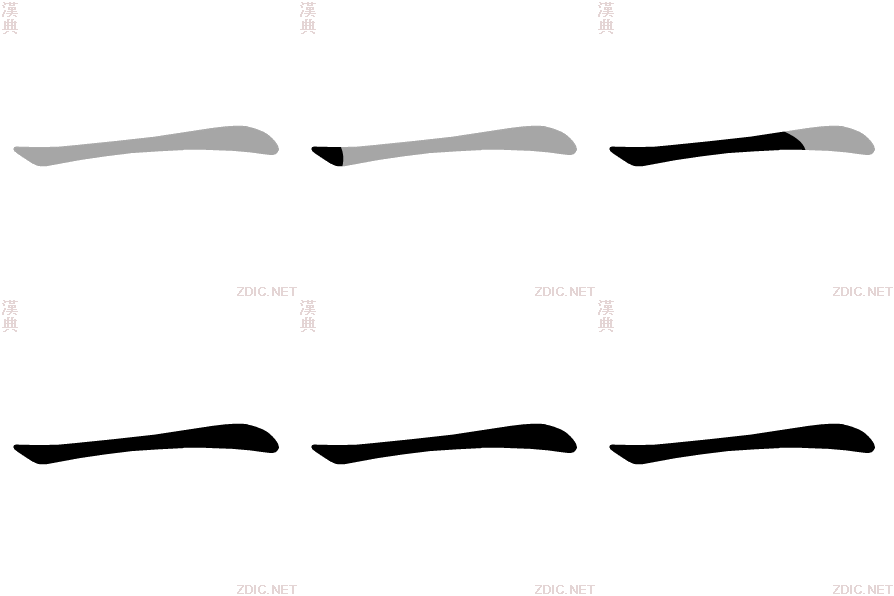
|
|
|
一
|
||
|
|
||
Brief explanation:
the smallest positive integer, the number one;
same, identical;
whole, entire;
Etymology:
“一” (yī) is a single-component character, categorized as an ideogram.
Etymology and Evolution
Oracle Bone Script:
 A simple horizontal stroke or line used to represent the number one, making it the most primitive numeral symbol.
Bronze Script:
 Inherited the form from the oracle bone script, consistently appearing as a horizontal line.
Small Seal Script (Shuowen Jiezi):
 Written as “一”. Xu Shen explained it as “In the beginning of the great inception, the Dao established itself in the One, then created and divided heaven and earth, transforming into all things,” elevating it to a philosophical and cosmic origin.
Clerical and Regular Scripts: The stroke became straight and level, eventually standardizing into the modern form “一”.
Original and Extended Meanings
Original Meaning: The smallest positive integer (one).
-
Extended Meanings:
Unity, whole: As in “统一” (tǒngyī, unify) or “一体” (yītǐ, an integral whole).
Whole, full: As in “一生” (yīshēng, a whole lifetime) or “一屋子人” (yī wūzi rén, a house full of people).
Same, identical: As in “一致” (yīzhì, unanimous) or “一模一样” (yī mú yī yàng, exactly the same).
First time, initial: As in “一见如故” (yī jiàn rú gù, feel like old friends at the first meeting).
Indicates a brief or attempted action: As in “笑一笑” (xiào yī xiào, give a smile) or “看一看” (kàn yī kàn, take a look).
字源:
注册体验学习、练习、复习全流程
- 每天学习一节课
- 在线练习直至记住
- 每天复习所有学过的内容,防止前学后忘
- 系统自动记录,重点复习你最需要练习的,高效学习,免除无效重复
- 90 天后拥有开始中文阅读的基本词汇量